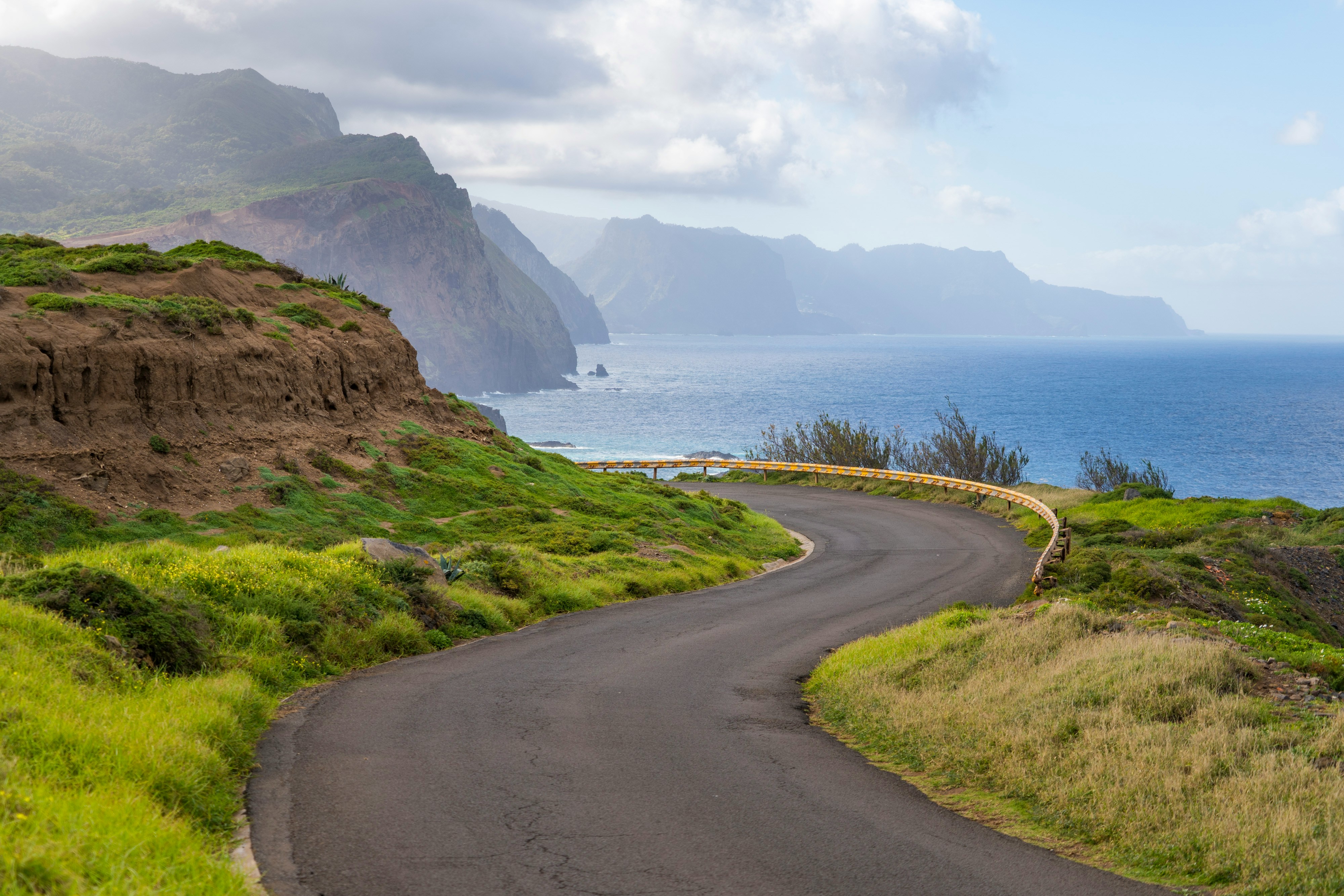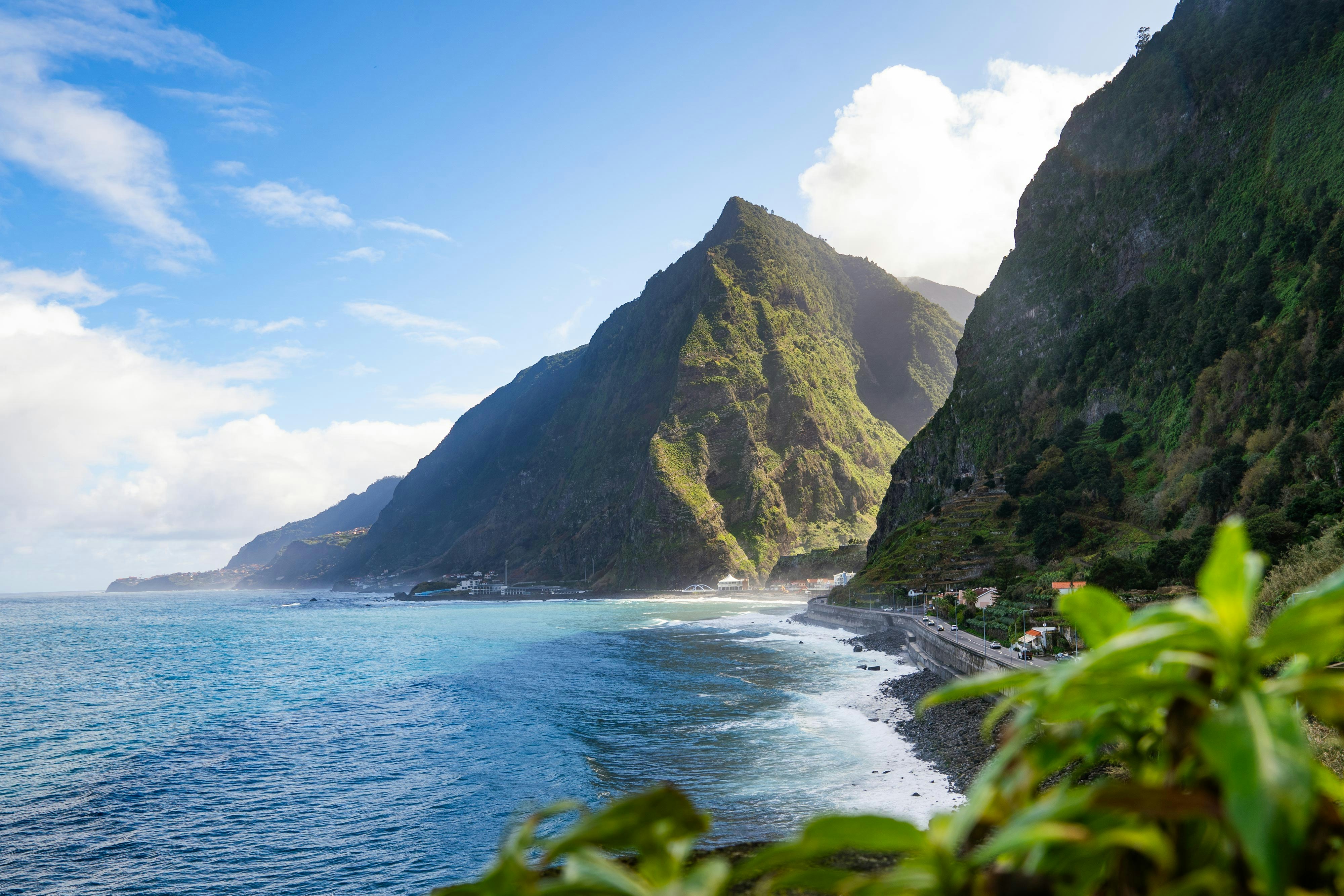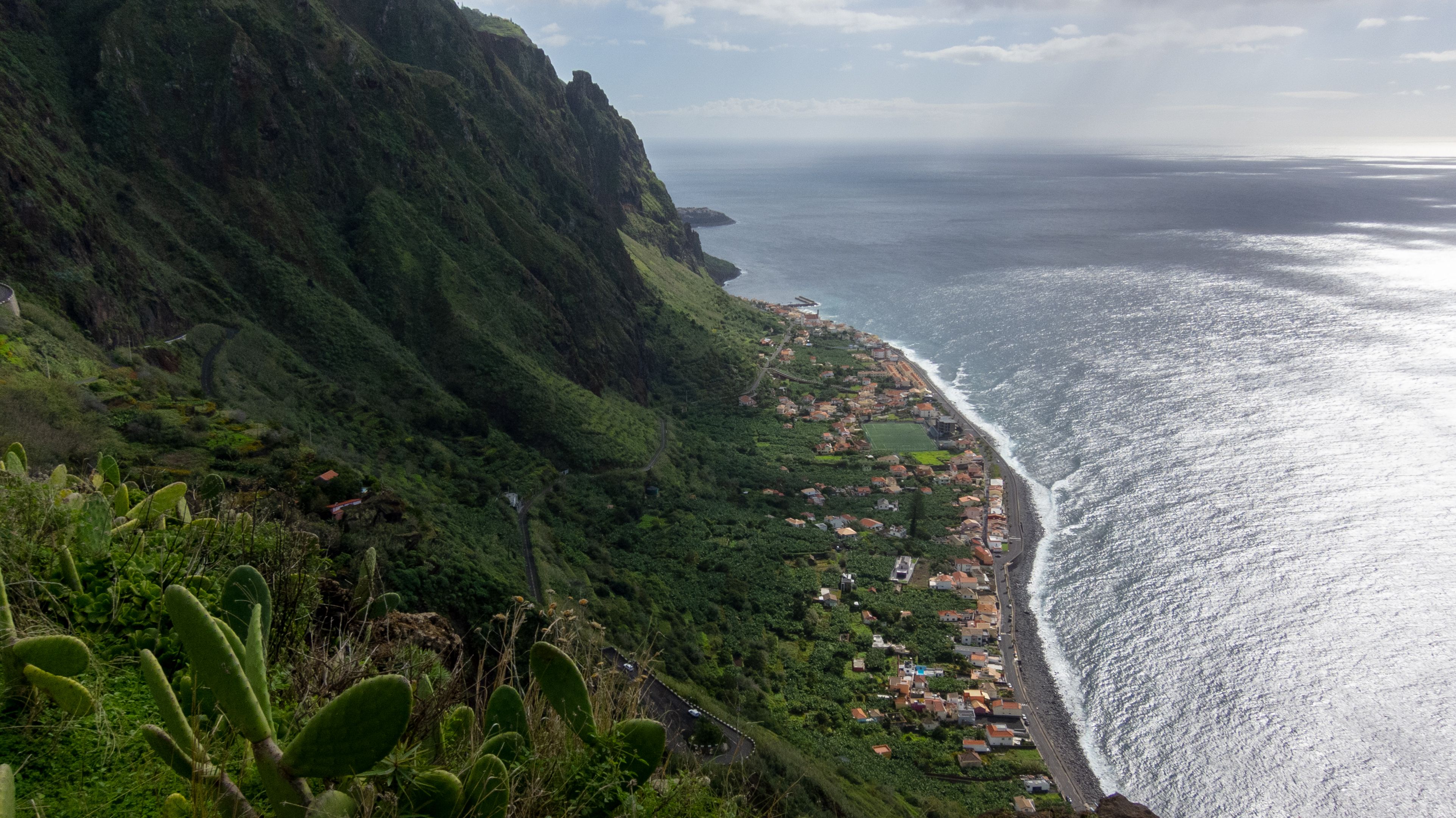
A fajã is a flat strip of land at the base of Madeira's cliffs, formed by landslides or old lava flows. They create rare pockets of level, fertile ground on an island where flat terrain is otherwise scarce.
Origin & Meaning
Fajãs form where debris from a collapsing cliff, or a historic lava flow, settles at sea level, building up small areas of flat land in a landscape that's otherwise almost entirely steep and mountainous. The word and the landform are shared with other Atlantic volcanic islands, most famously the Azores, where fajãs are especially common. On Madeira, where farmable flat ground is rare, these formations became valuable sites for small-scale agriculture and, in some cases, secluded coastal settlements. One of the best-known examples, Fajã dos Padres near Ribeira Brava, takes its name from Jesuit priests who once farmed its terraces of grapevines and fruit trees; today it's reachable by a small cable car that descends the cliff face, or by boat. A handful of fajãs have since been converted into small guesthouses or restaurants, giving visitors a rare chance to stay right at sea level beneath Madeira's towering cliffs.
Where You'll See It
Several fajãs dot Madeira's coastline, tucked beneath towering cliffs and often reachable only by boat, cable car, or a steep path down. They tend to have their own microclimate, sheltered from the wind, which historically made them useful for growing crops like grapes and bananas close to sea level.
Related Terms
Fajãs often form near where a ribeira reaches the coast, and like a ponta, they're a direct result of Madeira's volcanic origins and constant coastal erosion.
Frequently Asked Questions
What is a fajã?
It's a flat area of land at the base of a cliff, formed by a landslide or an old lava flow settling at sea level.
Are fajãs unique to Madeira?
No — the term and the landform are also common in the Azores, another Portuguese volcanic archipelago, though Madeira has its own smaller collection of them.
Can you visit a fajã on Madeira?
Yes, though many are only reachable by boat, a cable car, or a steep hiking path, since they sit at the base of tall coastal cliffs. Fajã dos Padres, near Ribeira Brava, is one of the most visited.
What were fajãs traditionally used for?
Their flat, sheltered ground made them useful for small-scale farming, particularly grapes and bananas, in a landscape where level land is otherwise scarce.